Field-service dispatch platform
Primeline Flow
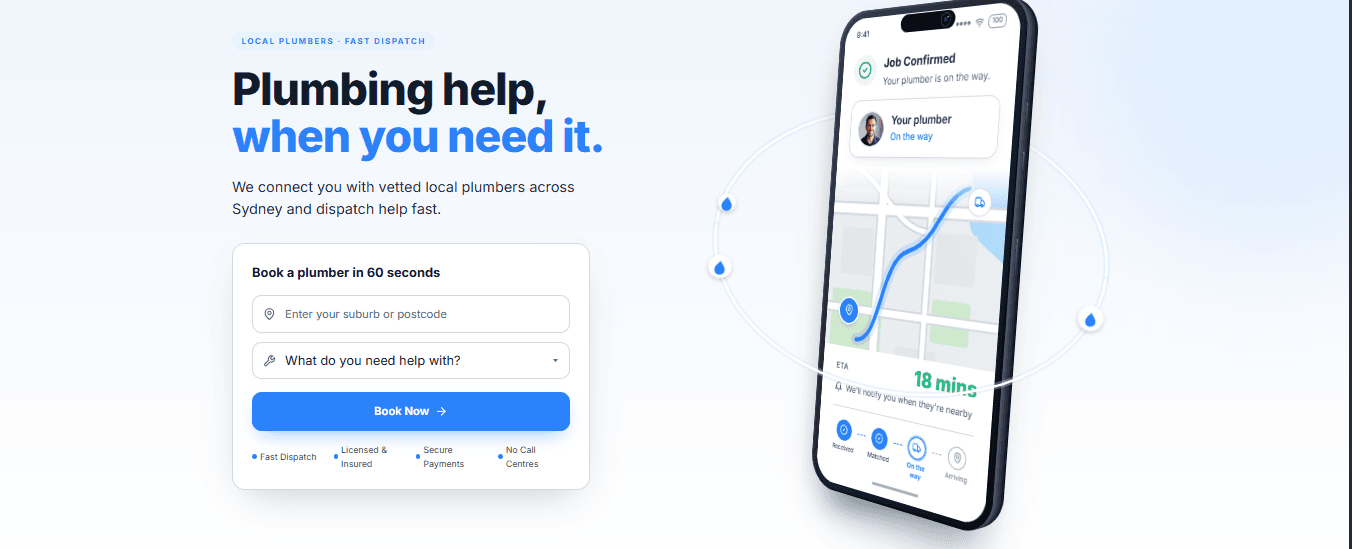
A dispatch platform that runs a plumbing business, from the first customer call to final payment, in one system the owner controls.
Visit the live site ↗- Role
- Solo build
- Scope
- Design, code, and infrastructure
- Category
- Field-service dispatch platform
- Year
- 2025
01 / The brief
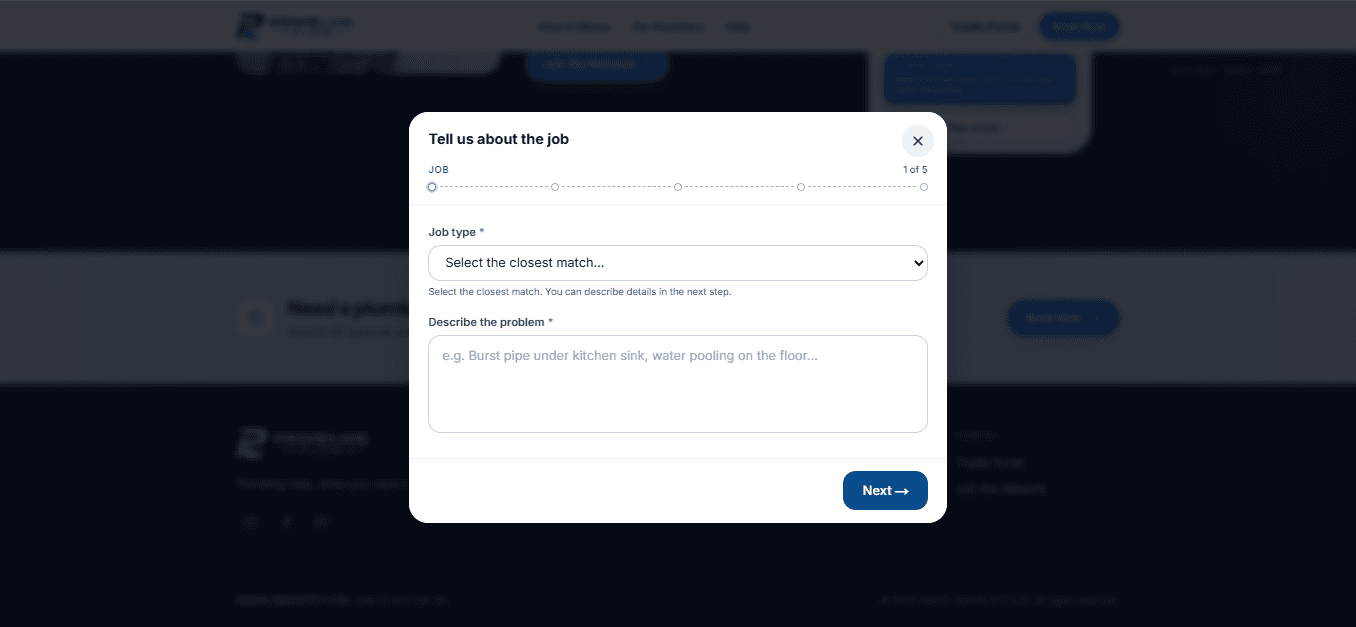
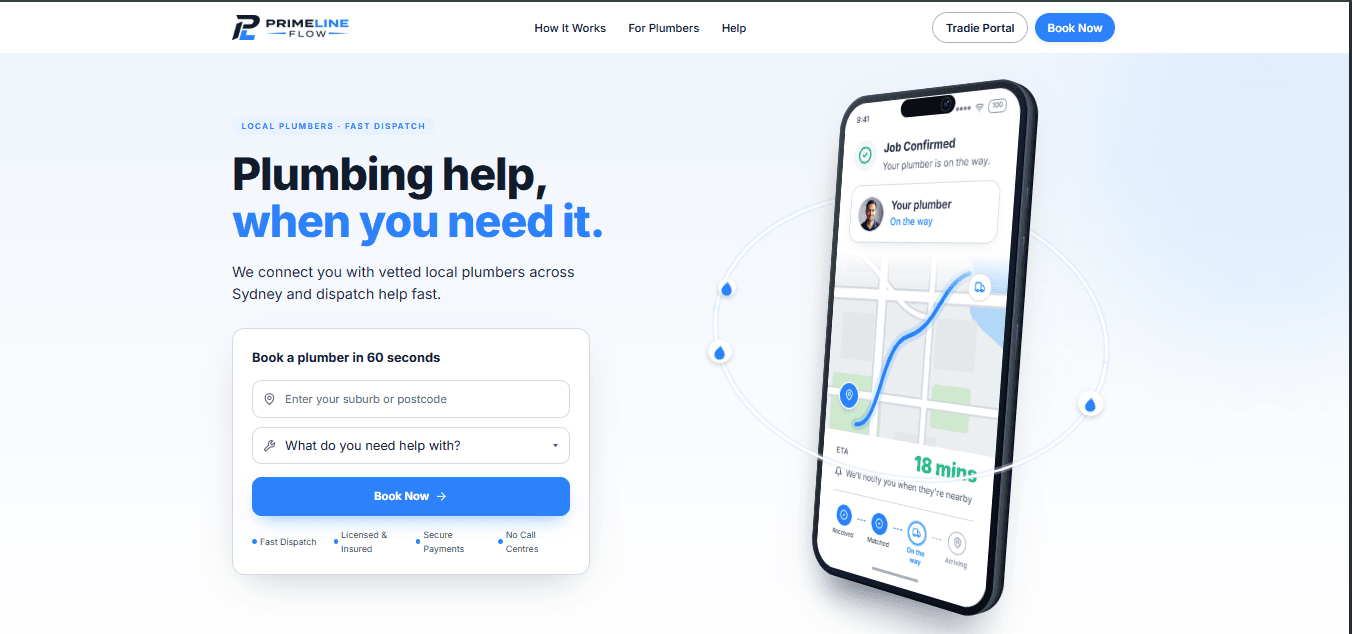
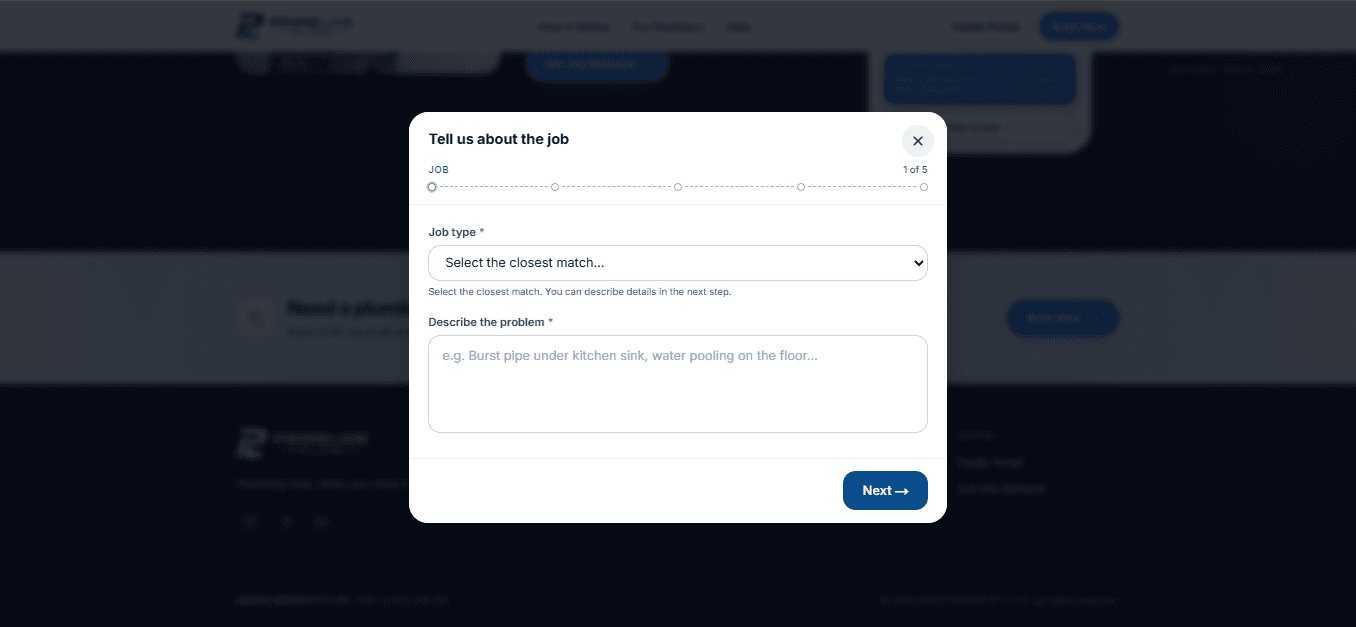
Primeline is a licensed-plumbing business in Sydney. The work was to replace a patchwork of phone calls, spreadsheets, and disconnected third-party tools with one system the business owns end to end: customer intake, job dispatch, field updates, and payment.
Because it moves money and coordinates people on live jobs, the bar was correctness rather than a good demo. A dispatch board that shows the wrong status, or a payment captured at the wrong moment, breaks the real business, not only the demo. It had to be right the first time.
02 / How it was built
This is where the method mattered most. The build was not one long free-running session. It ran as a team of subagents against a written plan, and each milestone was planned, built, tested, and reviewed before the next one started.
On a system that moves money, that structure is not overhead. The same four roles below carried the whole build, with payments, auth, and tenancy kept behind explicit boundaries the entire way through.
Planner
Turns the brief into a written plan, milestone by milestone, with explicit “done = X” criteria and named boundaries on sensitive paths, all before any code is written.
Coder
Implements one milestone at a time in small, reviewable commits. It never touches a protected path such as payments, auth, or data without a recorded decision.
Tester
Exercises each milestone end to end, covering types, build, and the real user flow, then reports what actually happened. Failures get reported, not smoothed over.
Reviewer
Reads the diff critically, checking whether anything touches money, identity, or data access the plan did not authorize. It signs off milestone by milestone and leaves that record behind.
03 / The hard parts
Manual-capture payments, the main protected path
Stripe authorizes payment at booking and captures it by hand only once a job is verified complete. Every state change, from authorized to captured to released or refunded, is a protected step: explicit, logged, and never touched by an agent without a recorded decision.
Multi-role auth and RLS tenancy
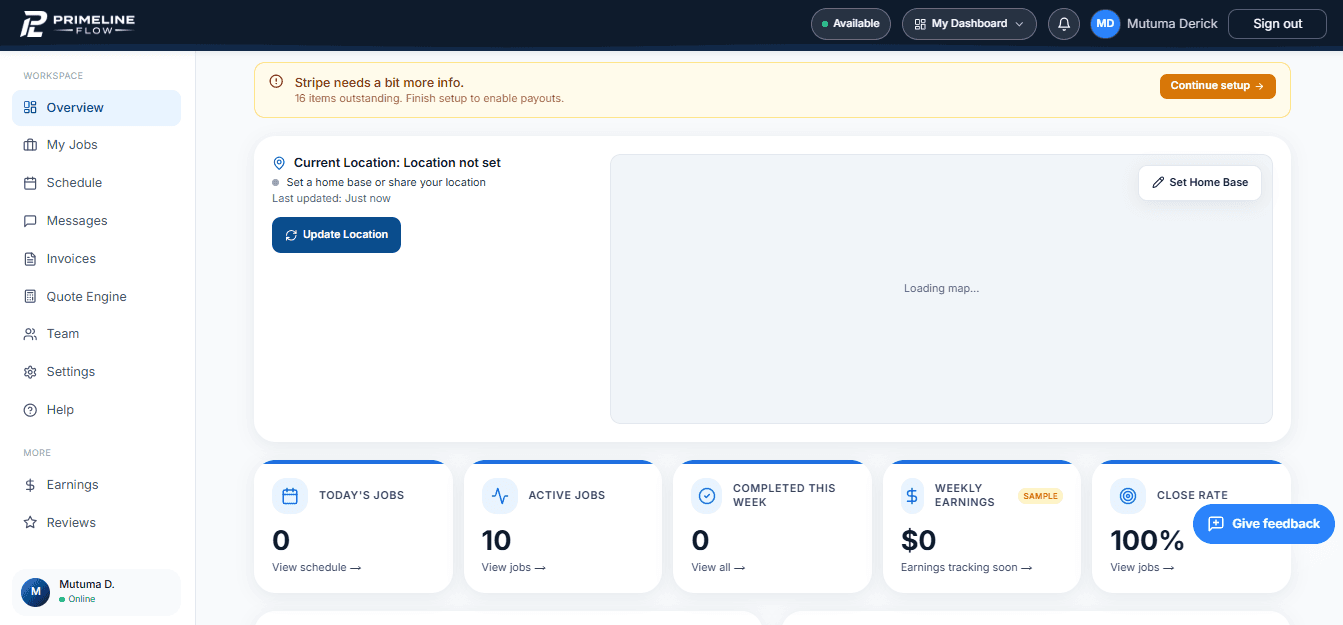
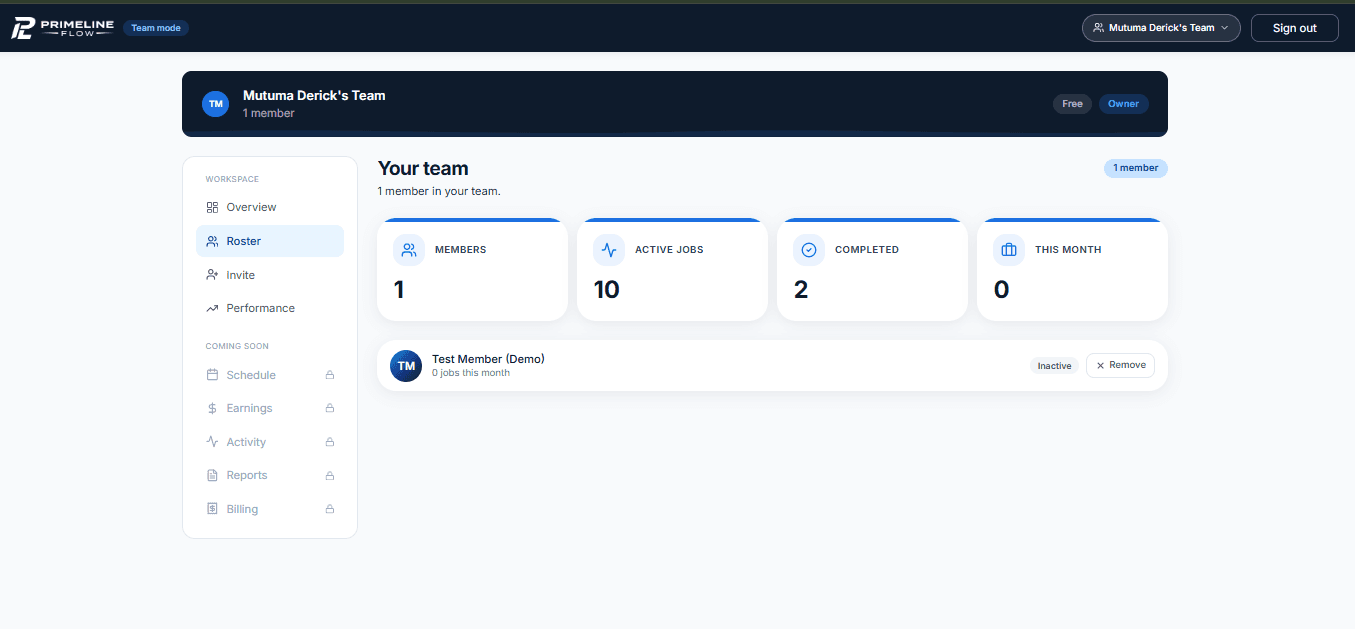
Owner, dispatcher, and field tradesperson each see only what they should. Access is enforced in the database with Supabase Postgres row-level security, rather than hidden in the client where it cannot be trusted.
Real-time dispatch
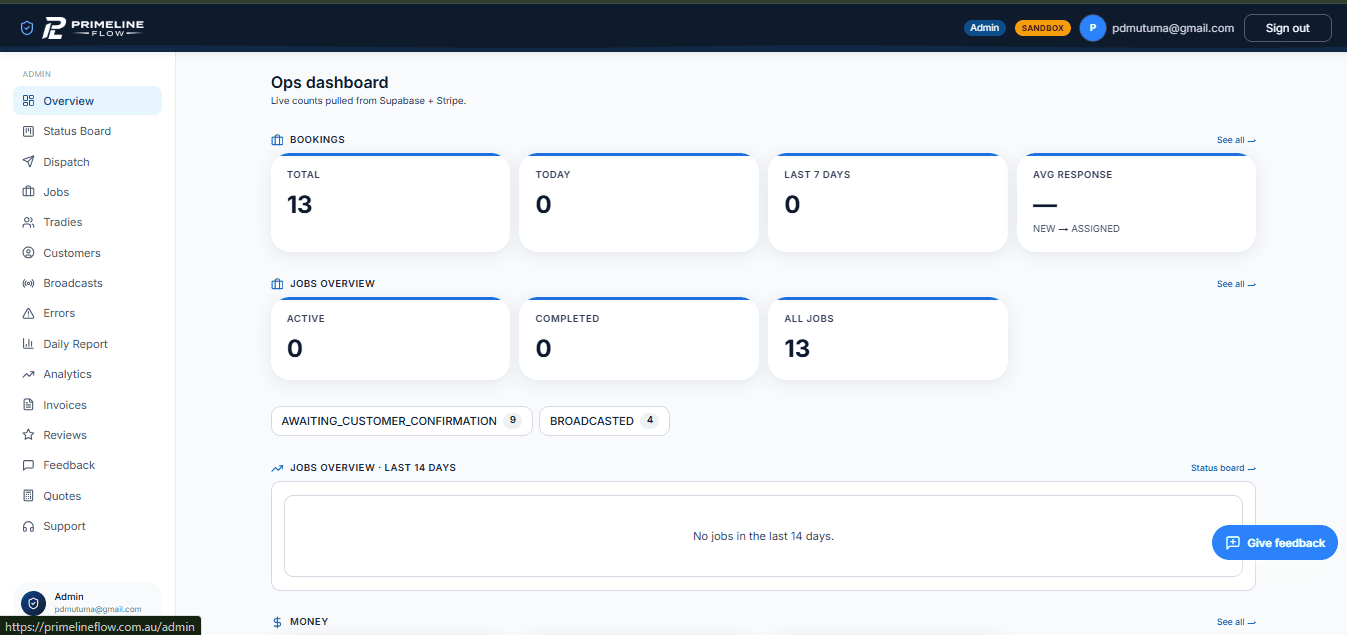
Jobs move from intake to a dispatcher’s board to a tradesperson’s phone and back, with status staying consistent for everyone watching the same job at once.
Twilio field notifications via n8n
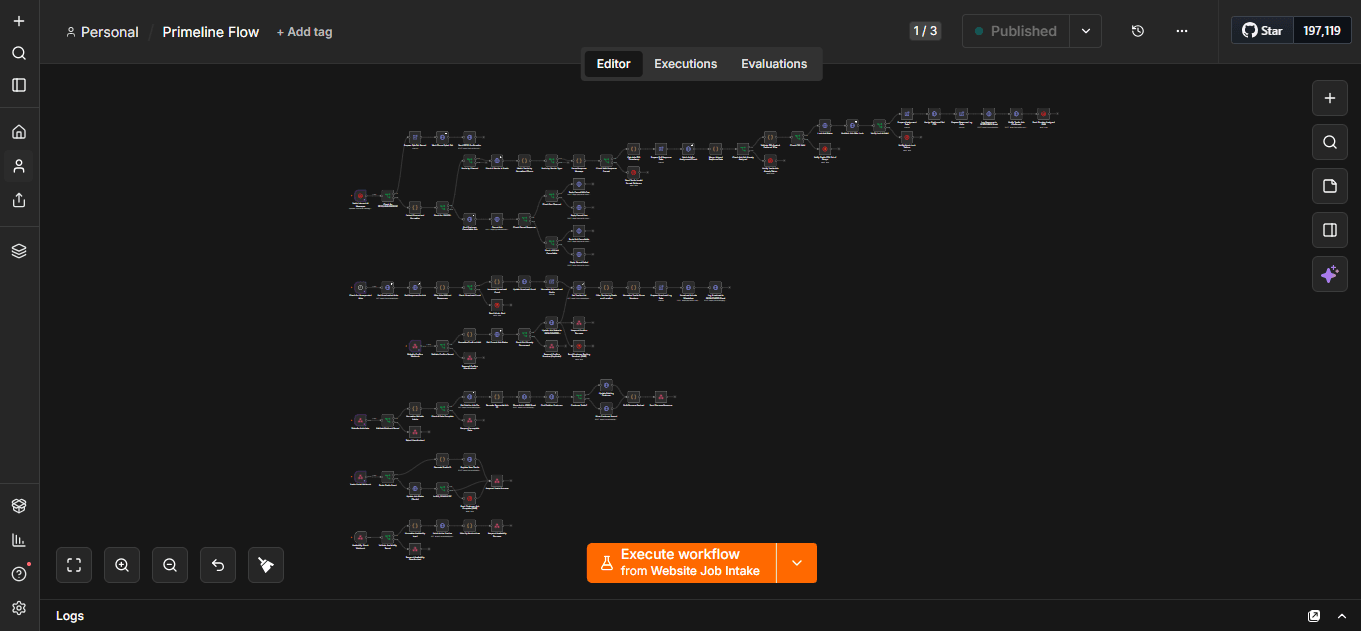
SMS to customers and field staff runs through n8n, so the messaging logic lives in one auditable place rather than scattered through the application code.
04 / Stack
- Next.js
- App UI and server routes, the part the business owns
- Supabase (Postgres · RLS · multi-role)
- Data, tenancy, and database-enforced access
- n8n
- Automation and messaging orchestration
- Twilio SMS
- Customer and field-staff notifications
- Stripe (manual capture)
- Authorize at booking, capture on completion
TODO: real, cleared-to-publish numbers go here (active tradespeople, jobs dispatched, uptime). Left blank on purpose rather than invented.
05 / Inside the product
Building something that has to be correct?
Same method, and the same boundaries on anything that moves money or data. Let’s scope it.
Book a discovery call